The Body in the Library
Academy of Fine Arts in Prague
A 12-hour (performative) reflection on artistic research
Friday 27.11.2026 from noon to midnight Veletržní 61
Friday 27.11.2026 from noon to midnight Veletržní 61
Academy of Fine Arts in Prague
Veletržní 826/61, Prague 7
Conference
The fifth edition of the 12-hour (Performative) Reflection on Artistic Research explores the possible misdemeanors of the field of artistic research, aiming to investigate art’s whereabouts in a landscape shaped by academic traditions. It asks what kind of art withstands the transfer from gallery to university, and what kind of research is already contained in the art that doesn't.
In the fictional small village of Agatha Christie’s 1942 mystery novel The Body in the Library, a library is troubled by the appearance of an improbable and sensational body. In the libraries of artistic research, a field shaped in the last three decades by multiple, sometimes conflicting definitions, there are many physical presences that disturb the regular dustjacket life of books on the shelf. The materiality of the artwork, expansive in space and time, is not easily reconciled with a two-dimensional page of text. The embodied presence of the artist, often more prominent in the process than that of researchers in other disciplines, is sometimes at odds with traditional ideas of objectivity. Ultimately, the corpus of art itself does not sit comfortably in the formats of academic research contexts.
It might be that a spectacular crime in the artistic research library is yet to be uncovered. In 2026, the LARGE 12h conference starts from the premise that just because the body has not yet presented itself, it doesn't mean there are no misdeeds to be investigated. It puts forward a provocative presupposition: what if the striking body that might show up behind the shelves where artistic research is being carried out is that of art itself? And not because it is central to the process of inquiry, but on the contrary, because it has been rendered so marginal to it that it can be easily removed. Acknowledging this as a distinctive possibility in the field, it aims to explore ways in which artistic practice can be placed at the centre of research, opening grounds for new ways of investigation.
In the process of peer-reviewing contributions for artistic research journals, the question of the quality of the art is rarely—if ever—asked. In the evaluation of an artistic doctoral project, what is more often assessed is an artist's ability to “reflect” on their practice and “reference” relevant theoretical literature, rather than a project’s contribution to the field of contemporary art. By contrast, artists whose work indisputably contributes to contemporary art—whether or not accompanied by a text explaining how—are rarely present in the field unless they are employed by universities. Rather than diminishing with time, the rift between artistic research carried out in universities and research carried out in the professional world of contemporary art gradually increases—with some of the definitions of artistic research even presenting the word “artistic” as a mere adjective that does not need to include artistic practice if it incorporates artistic methods, manners, or experiences.
Over the course of twelve hours, the event will explore the concerns brought about by this separation between art and academia in a series of artistic investigations: not only interrogations of the current state of affairs or discussions on how art incorporates research, but also explorations in which the art itself is the research.
Curated by Irina Gheorghe, Anetta Mona Chișa and Lamija Čehajić.
Participants
The Signature of Certain Things, 2022
The film essay was created on the occasion of the thirtieth anniversary of the founding of Gandy Gallery as a reflection the functioning of art scene in recent decades. Digital manipulation and experiments with moving images play an important role in the film, it develops a debate on the ambiguity of meanings of artworks. The questions addressed to the contradictions of art and its effects into society are commented through the formal means of production of the film itself.
The Commodity Catalogue, 2023
The film is the second part of a trilogy about representation, art and politics. The first film, Signatures of Certain Things, explored the role of artworks and art institutions in society. The film asked the question of to whom art is actually addressed. In the second part, titled Commodity Catalogue, the author explored the commodified nature of artworks and the question of whether anything meaningful and critical can still be expressed in an environment defined by the all-pervasive power of money. The central motif is also the form of the film itself, based on the logic of commodified and multiplying images, lost in an indistinguishable flood of data.
The Totalitarian Society of the Image, 2024
The film is the third part of a trilogy about representation, art and politics. Signatures of Certain Things dealt with the role of artworks and art institutions in society. The film asked the question of who art is actually for. In the second part, titled Commodity Catalogue, the author addressed the commodified nature of artworks and the question of whether anything meaningful and critical can still be expressed in an environment defined by the all-pervasive power of money. The last part was meant to be a synthesis of the two previous ones. Instead, it reveals the contradictions of artistic analysis, which do not fall into a clear position of political action, but become a symptom or a curse.
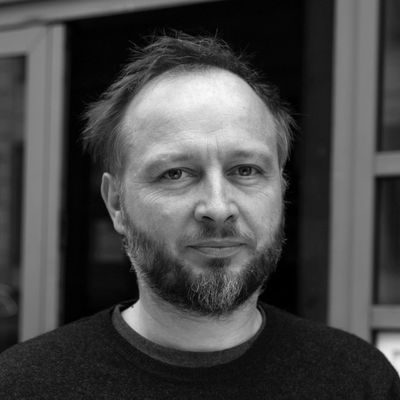
Zbyněk Baladrán is a visual artist. He explores the contradictions of the contemporary world and the ways in which art and artistic practice can help us understand them. He studied art history at the Faculty of Arts of Charles University and new media at the Academy of Fine Arts in Prague. In 2001, he co-founded Display—Association for Research and Collective Practice, where he works as a curator and organizer. He served as a curator for Manifesta 8 in Murcia (2010) and Steirischer Herbst in Graz (2012). From 2006 to 2010, he worked on the interdisciplinary project Monument of Transformation. He has participated in exhibitions such as Manifesta 5 in San Sebastián (2004), the 11th Lyon Biennale (2011), and the 56th Venice Biennale (2013). He has exhibited in group shows at MoMA in New York (2015), Bonniers Konsthall (2026), and elsewhere. Since 2025, he has been teaching at the Academy of Fine Arts in Prague alongside Ladislava Gažiová.
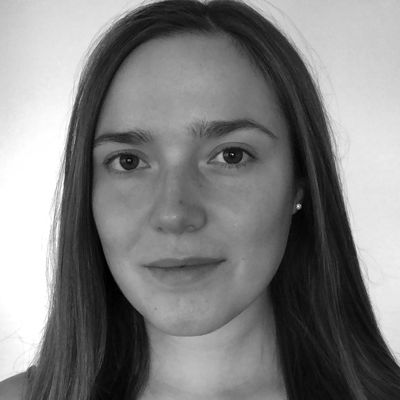
Katarina Ranković is a Glasgow-based artist, writer and emerging composer working with performance, writing and video to create experimental characters and philosophical fiction. Her practice explores a distributed and porous notion of self, often through persona-based performance and the voicing of non-human or fictional entities. Ranković holds a PhD in Art from Goldsmiths (2023) and has presented work at venues including South London Gallery, Transmediale and Bloomberg New Contemporaries. Current projects include Aria and the Curtain, an experimental libretto about a sentient song brought into being through collective singing, and Mourning Flowers, a series of intricate ink drawings exploring the value of the handmade and the melancholy of the singularity in an age of generative reproduction.
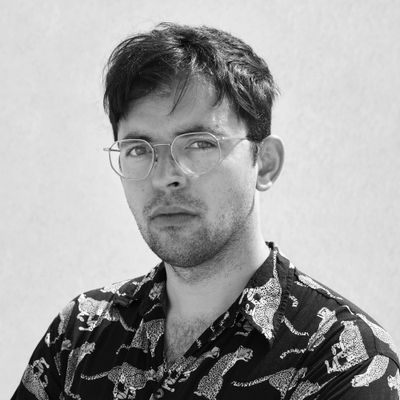
Jiří Žák (b. 1989) is an interdisciplinary artist working with moving images, video installations, photography, performance, and theater. His practice bridges research and imaginative storytelling. For years, he has explored the history of the relations between the former Czechoslovakia and the MENA region. He has exhibited both in the Czech Republic and internationally (including Bangkok Kunsthalle, the 2021 Kyiv Biennial, and the 2018 Warsaw Biennial) and participated in Berlinale Talents 2024. He is a co-recipient of the 2020 Jindřich Chalupecký Award and a winner of the 2015 EXIT Award. Together with artist Matěj Pavlík, he received the award for Best Czech Experimental Documentary at the 2024 Ji.hlava International Documentary Film Festival. In 2027, his work will be featured at The Sharjah Biennial 17 in the United Arab Emirates. He is a member of Artyčok TV. A graduate of the Academy of Fine Arts in Prague, he is currently pursuing doctoral studies at the Faculty of Fine Arts, Brno University of Technology (BUT), where, in 2025, he received the BUT Rector’s Award for outstanding outstanding achievements in his doctoral research.
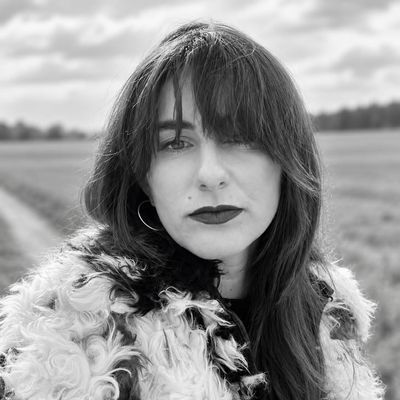
Lenka Tyrpeklová is an artist, researcher and doctoral candidate at the Academy of Fine Arts in Prague whose practice brings together art, activism and direct work with incarcerated people. Her long-term focus is the Czech prison system, particularly the purpose of punishment, social reintegration and the everyday experiences of people in prison. Since 2017, she has initiated and developed participatory art programmes in prisons, continuing this work through the Institute of Unfreedom. Her approach is grounded in sustained personal contact with participants and reflection on power relations and the limits of her own involvement. Through exhibitions and public projects, she brings experiences from closed institutional environments into public space, raising questions about guilt, responsibility and the relationship between individuals and institutions.
Daniela Voráčková is a performer, creator, teaching artist, and facilitator who, since 1988, has been working at the intersection of dramatic, physical, visual, street, and site-specific theater and performance. She has participated in numerous independent projects in the Czech Republic and abroad. In her work, she likes to combine various artistic forms and approaches; she focuses on collective creation and seeks new ways of expression and communication with the audience. She is a co-founder of the MOTUS association, which operates the Alfred ve dvoře theater. For more than twenty years, she has been giving creative workshops for both children and adults. In addition to her theater work, in recent years she has also focused on facilitating creative processes, film and television acting, and collaborating with visual artists on video art projects.
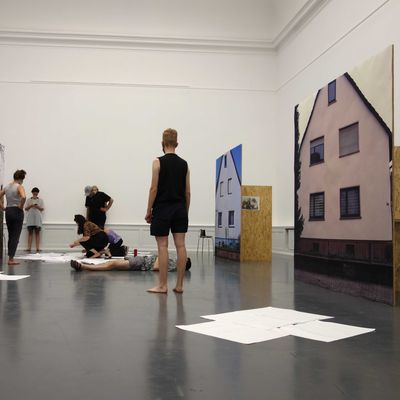
Jeremiah Day is an artist, thinker and performer. His work establishes a montage/narrative form, where realities intertwine through different techniques, including photography, video and movement. Through this idiosyncratic form of non-fiction, Day explores the commemoration of political struggle as itself a form of engagement. In 2017, Jeremiah Day earned a doctorate from the Free University of Amsterdam (VU) for his practice based project, drawing upon Hannah Arendt and Allan Kaprow as the basis for renewed exploration of art’s role in civil society.
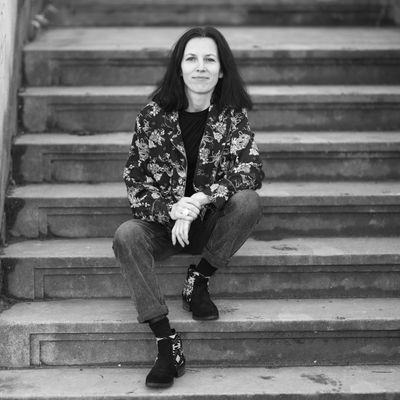
Hana Chmelíková is a visual artist and PhD candidate at the Academy of Fine Arts in Prague. Her work addresses visibility and the inappropriateness, questioning the relational and linguistic frameworks we are part of and exploring the possibilities of reframing them by visual means. Working across drawing, printmaking, language, imprint and the body, her artistic practice encompasses both individual and participatory approaches. It often draws on personal experience and the social roles she inhabits as a mother, parent, student, employee or friend. Approaching drawing as a method, a mode of thinking and a social act, she creates participatory situations that place people in unfamiliar, potentially awkward or disorienting circumstances, departing from the conventions of everyday interaction. Through these moments of disorientation, she explores how drawing can enable new forms of connection and how people might remain in relation amid uncertainty. Her doctoral research investigates drawing as a relational practice and asks: What can drawing know about a relationship?
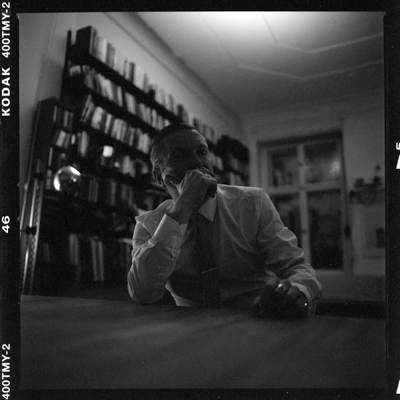
Declan Clarke is an artist and filmmaker. As an artist he has exhibited internationally in institutions such as PS1 MoMA, New York; Tate Britain, London; HKW Berlin and Kunsthalle Tübingen, Germany; Lentos Kunstmuseum, Austria; Beijing Art Museum of Imperial City, China; the 2nd Moscow Biennial, Russia; and the Centre for Contemporary Art, Lagos, Nigeria. In 2015 he was awarded the Jury Prize at the 31st Biennale of Graphic Arts, Ljubljana. His films have shown internationally at festivals such as FIDBA, Buenos Aires, Argentina; FID Marseille, France; Docs Lisboa, Portugal; Villa Medici Film Festival, Italy; Beldocs, Serbia; Tromsø International Film Festival, Norway, and the Prismatic Ground and New York Underground Film Festival, both NY, USA. His film ‘Saturn and Beyond’ won the Georges De Beauregard International Award at FID Marseille IFF, 2021.
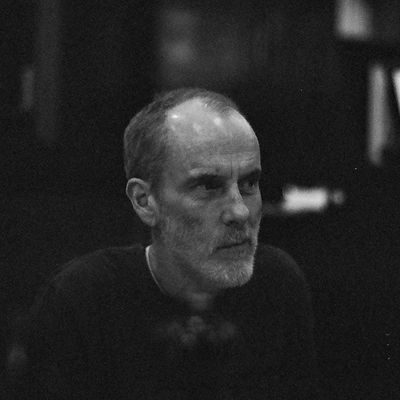
Pádraig Timoney (1968) is an artist from the North of Ireland. He has been making work and exhibitions since graduating with a BA Fine Art from Goldsmiths College London in 1991. Solo exhibitions in the last few years were at Chandelier in Berlin, Alle Alle in Oslo, Josey in Köln, Andrew Kreps Gallery in New York, The Modern Institute in Glasgow, and Studio Indipendenza in Rome. The work is an ongoing production of paintings, photographs, and objects in a consistent variety of material investigations. Diverse works are always shown together, with the result that solo exhibitions have sometimes been confused for group exhibitions.
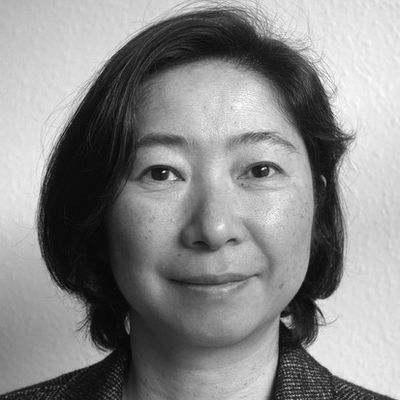
Miya Yoshida is a cultural practioner, curator, and theorist. Since 2024, Yoshida work as Professor of Artistic Research and Head of PhD in Art Programme at the University of Applied Arts Vienna, Austria. She completed her PhD at Malmö Art Academy, Lund University, Sweden. Yoshida has been developing ‘theory and practice’ in various forms and formats based on her artistic research. Her current projects includes the 6th Asian Triennale Manchester (2025), Listening to the Stones (Kunsthaus Dresden, 2021-22), the annual exhibition project, Sharing as Caring No. 1–7 (Heidelberger Kunstverein, 2012–2018, after the butcher, Berlin 2022), Labour of Love, Revisited: Amateurism in the Age of Digital Net (Arko Art Museum, Seoul, South Korea, 2011) among many others. Her recent writings and publications exemplified in Reformulating the Architectures of Exhibitions (Exhibition Amnesia, Curatography Issue.10, 2023), Listening to the Stones (Kunsthaus Dresden, 2023), Towards (Im)Measurability of Art and Life (Archive Books, Berlin 2018), among others.
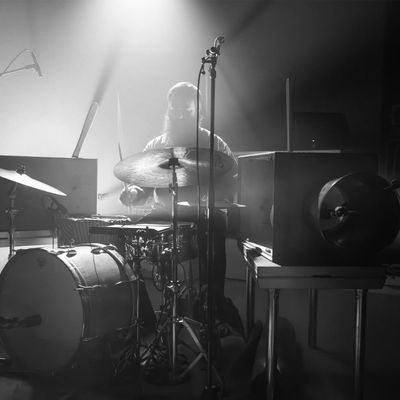
Ferst Dadler Ferst Dadler is a Prague-based performance group founded in 2017 through the friendship and collaboration of three artists: Roman Zotov-Mikshin, Elia Moretti and Inga Zotova-Mikshina. Working across theatre, dance, music and visual art, the collective develops sensitive, playful and inclusive forms of performance. Its practice explores how artistic encounters can create new relationships between people, objects and their environments, often through collaboration with artists and thinkers from other disciplines. Ferst Dadler approaches performance as a space for shared inquiry, where artistic practice becomes a way of thinking, sensing and creating knowledge together.
Roman Zotov-Mikshin is a dance artist, choreographer and pedagogue. Approaching movement as a language for expressing feelings, thoughts and atmospheres that cannot be conveyed through other means, he has explored different dance genres to expand his vocabulary. His studies at the Duncan Centre Conservatory and encounters with progressive thinkers from various fields led him to explore dance beyond established classifications and categories. His current practice is guided by joy, curiosity, a close relationship with sound, and an interest in creating fleeting spaces.
Elia Moretti is a musician, composer, performer and researcher working across sound, performance and expanded listening practices. Based in Prague, he explores listening as a relational and transformative practice through which human and non-human agencies meet. His artistic and research interests include the performativity of sound, material relations and the ways listening can create reality. Elia currently leads the research phase of the project Listening as Method.
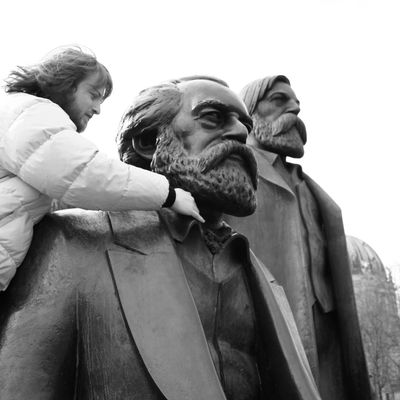
Stefan Tiron was born in 1976 and has a degree in the History and Theory of Art from the National University of Arts in Bucharest. He is a curator, writer and theoretician living between Berlin and Bucharest. He had scholarships and residencies at Academia di Romania in Rome, Akademie Solitude Stuttgart, Chez Bushwick Brooklyn New York, Utopiana Geneva, PAF in France and Q21 Vienna. Since the 2000s he has been writing about pop culture, cultural hacking/open-resource/rip-off dynamics in Bucharest (for Springerin), space tourism (for Monochrom Vienna) and is a contributor to Berliner Gazette, Critic Atac and Spectrul. In 2023 he co-curated New Temporealities: The Xenogenesis of SF at Indecis Gallery. Between 2005-2026 he coordinated and co-curated the sleep-over & alternative education programme cozZzmonautica, celebrating the legacy of Science Fiction, DIY/DIT Space Exploration and Cosmology. These art & science “wonder shows” and sleep concerts take place in various galleries, regional natural history museums, university classrooms, private homes, clubs and institutions under the banner of The Space Agency for Nocturnal Journeys to the Origins of the Universe.
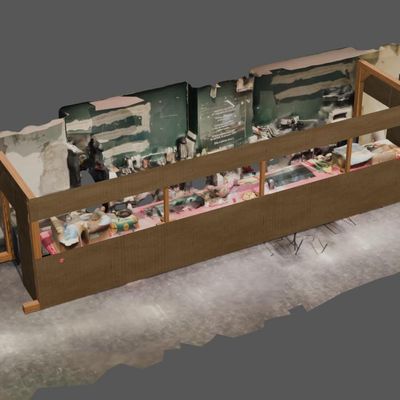
Students: Daniel Altera, Mia Bružeňáková, Jasmin Daghstani, Huijae Kim, Anna Kolomazníková, Sofiia Kolopeniuk, Nikita Kutimskiy, Ema Laštovková, Wen-Ling Lin, Łucja Motyl, Tereza Nguyenová, Michaela Omelková, Kateřina Prskavcová, Anastasiia Tovstokor, Klára Latta
Pedagogues: Tomáš Vaněk, Jiří Havlíček
Schedule
The Body in the Library
– a 12-hour (performative) reflection on artistic research
– 27th of November 2026, from noon to midnight, Academy of Fine Arts in Prague
AVU Veletržní, Veletržní 826/61, 170 00 Prague
11:45 - 12:00 Kiosk – A kiosk is an initiative, not an institution.
12:00-14:45 BLOCK I
12:00 – 14:45 BLOCK 1
12:00 – 12:15 Opening, welcome
12:15 – 12:30 Zbyněk Baladrán, The Signature of Certain Things, screening
12:30 – 13:15 Katarina Ranković, Aria and the Curtain, performative lecture
13:15 – 13:45 Jiří Žák, We Love Shooting: Re-animation of Necropolitics, lecture performance
13:45 - 14:00 Kiosk – You can read the world through observation.
14:00 – 14:45 Lenka Tyrpeklová and collaborators, Wish for Whatever You Want, performance, with Daniela Voráčková and co-creators Lůca Zbranková, Petra Dančová, Mishell Samík, and Soleil.
14:45 – 15:15 Kiosk – We listen more than we speak.
15:15 - 17:15 BLOCK II
15:15 – 15:45 Jeremiah Day, Preconditions, performance
15:45 – 16:15 Hana Chmelíková, Someone Said the Circle Is the Best Shape of All, participatory situation
16:15 – 17:15 Kiosk – Ordinary things carry their own weight.
17:15 - 20:30 BLOCK III
17:15 – 17:45 Declan Clarke and Pádraig Timoney, Cards on the Table, dialogue
17:45 – 18:45 Miya Yoshida, Mimi o Sumasu—The Very Act of Listening, performative lecture with collective listening session
18:45 – 19:30 Kiosk – Silence is also a voice.
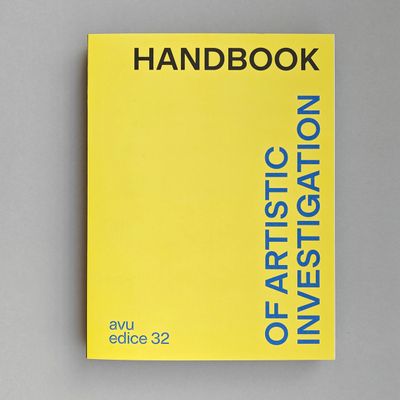
With book launch: Handbook of Artistic Investigation
19:30 – 20:30 The Body in the Library: On the Peculiar Condition of Art in Artistic Research. Panel discussion with Jeremiah Day, Katarina Ranković and Miya Yoshida. Moderated by Anetta Mona Chișa
20:30 – 22:00 Kiosk – Even a conference has its night.
22:00 - 00:00 BLOCK IV
22:00 – 22:30 Ferst Dadler (Elia Moretti, Roman Zotov-Mikshin), The Agency of Ephemeral Objects: Sound, Movement and Writing, lecture performance
22:30 – 22:45 Zbyněk Baladrán, The Commodity Catalogue, screening
22:45 – 23:15 Ștefan Tiron, Exact Tracking Status Unkown, lecture performance
23:15 – 23:30 Zbyněk Baladrán, The Totalitarian Society of the Image, screening
23:30 – 00:00 Closing remarks
00:00 - 00:30 Kiosk – A kiosk is an initiative, not an institution.
About LARGE
About LARGE
LARGE is a department dedicated to the support and development of artistic investigations at the Academy of Fine Arts in Prague, as well as a reflection on the nature of such inquiries. It is dedicated to exploring what it means to investigate not about art but through and in art: how this investigation can be carried out, how it can produce knowledge and in what relationship this knowledge finds itself to other disciplines, and to a broader social context. As such, LARGE is focused on interrogating the specificities of research conducted through artistic practice and thinking: its methods, its possible systems of evaluation and presentation, as well as the contradictions inherent in the process. Taking seriously the idea that artistic research must often produce not only its content but also its form, methods and sharing practices, LARGE places particular focus on the exploration of art specific presentation formats in research.
The activities of LARGE include, in addition to courses, seminars and guest lectures: organising the international conference A 12-hour (Performative) Reflection on Artistic Research, taking place yearly at AVU since 2022; publications (such as the upcoming periodical Velké: Journal for Artistic Investigation, whose pilot issue was launched in 2024, and the Handbook of Artistic Investigation, published in October 2026); methodological documents, such as the “Principles for Evaluating Artistic Doctorates at AVU”, as well as a series of interdisciplinary performative presentations bringing together artists and scientists under the title Rendezvous Problem: Formulations on the Possible Ways for Art and Science to Meet.
LARGE develops and promotes research that:
- is grounded in artistic practice and is rooted in the unique character of art,
- seeks to achieve both disciplinary depth and interdisciplinary breadth,
- contributes significantly to professional artistic practice.
LARGE pursues the following goals:
- to interrogate the ways in which research can be an integral part of artistic practice and artistic practice a key component of research,
- to contribute to conceptualising methodological tools for a better integration of artistic doctorates in an academic environment through studies on methodologies and evaluation criteria, both within AVU and at the levels of national academic and governmental bodies,
- to develop platforms for exploring interdisciplinarity in artistic research, both nationally and internationally,
- to improve the academic standing of artistic research at AVU through courses, events and publications,
- to support artistic doctorates and their supervision through consultations and workshops,
- to contribute to a better integration of AVU artistic research outcomes in an international context through publications and events,
- to promote and implement the Research Catalogue platform.
LARGE was initiated as a project focused on artistic research by the Vice-Rectorate for Art and Research of the Academy of Fine Arts Prague in 2022. Beginning with 2024 it was established as a new Department for Artistic Research.
Výzkum studentů z ateliéru Intermedia III byl realizován s podporou VGS, výzkumného grantu AVU, poskytnutého Ministerstvem školství, mládeže a tělovýchovy v roce 2026.
S laskavou podporou Rumunského kulturního institutu v Praze.